
Messenger Clone
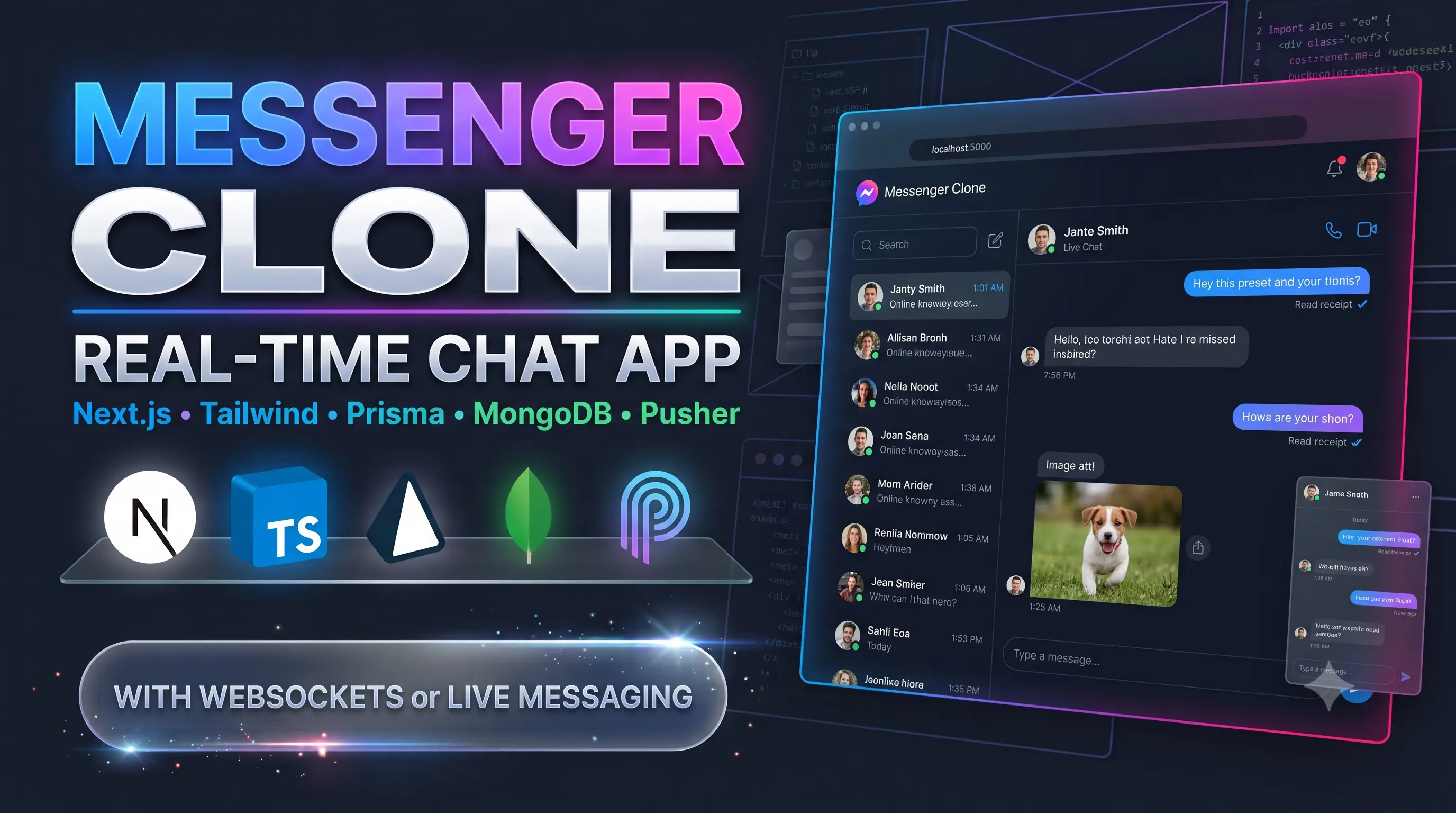
Messenger Clone is a full-stack real-time chat platform featuring secure authentication, one-to-one and group conversations, instant messaging, image sharing, read receipts, and live updates powered by WebSockets. Built with Next.js, TypeScript, Prisma, NextAuth, MongoDB, Pusher, Cloudinary, and Tailwind CSS.
Technical Case Study
Overview
A full-stack, real-time communication platform engineered with Next.js and TypeScript, replicating the core architecture and user experience of modern messaging applications. The platform enables low-latency 1-on-1 and group chats, media sharing, active status tracking, and instant read receipts.
Key Features
- Real-Time Messaging: Event-driven architecture powered by WebSockets (Pusher) for sub-second message delivery without polling.
- 1-on-1 & Group Chats: Dynamic conversation creation with multi-user participant management, custom group naming, and member controls.
- Read Receipts & Active State: Live visual indicators showing message delivery, unread counts, and participant read receipts in real time.
- Rich Media Sharing: Drag-and-drop media upload support integrated with Cloudinary for fast CDN image delivery and previews.
- Authentication & Profiles: Secure credential and OAuth authentication via NextAuth, complete with editable user profiles and avatars.
- Responsive Layout: Responsive dual-panel desktop view with collapsible mobile conversation drawers built using Tailwind CSS.
Tech Stack & Architecture
- Frontend: Next.js (App Router), TypeScript, Tailwind CSS, Headless UI
- Backend & Real-Time: Next.js Route Handlers / Server Actions, Pusher Channels (WebSockets)
- Database & ORM: MongoDB, Prisma ORM
- Auth & Cloud Services: NextAuth.js, Cloudinary API
- State & Data Fetching: React Hooks, Axios, Zustand
Technical Challenges & Solutions
1. Real-Time State Consistency Across Multi-User Sessions
- Challenge: Preventing UI race conditions, duplicate message rendering, and out-of-order delivery across active browser sessions.
- Solution: Structured distinct Pusher presence and private channels (
conversation:[id]anduser:[email]). Client-side state merges incoming WebSocket payloads with optimistic updates to deliver instant perceived performance while ensuring backend data integrity.
2. Scalable Read Receipt Propagation
- Challenge: Updating read status across multiple recipients in high-activity group conversations without triggering excessive database writes.
- Solution: Modeled message-level
seenByrelation sets in Prisma, batching read-state updates when a user focuses the active thread and broadcasting single diff events to room participants.
Key Takeaways
Demonstrates hands-on proficiency in building reactive distributed UI systems, managing bidirectional real-time communication protocols, and handling relational schemas within document databases.